CB2
Cannabinoid receptor CB2 (CB2R) is a cannabinoid G protein-coupled receptor originally characterized as a peripheral receptor expressed in macrophages and immune tissues[1][2]. Mechanistically, CB2R couples through Gi/o proteins, inhibits adenylyl cyclase, and activates MAPK signaling, linking cannabinoid receptor signaling to immune-cell regulation[3]. In inflammatory biology, CB2R modulates immune-cell functions in cell systems and animal models, and CB2-deficient mice show exacerbated inflammatory phenotypes[2]. In neuroinflammation, CB2R activity is especially relevant in macrophage-lineage cells and CNS microglia, connecting peripheral immune regulation with central immune responses[4]. Compared with CB1, CB2 is distinguished by immune-enriched distribution, while CB1 is found predominantly in neuronal tissues and also couples to ion-channel signaling[5]. For experimental applications, CB2-selective agonists such as HU-308 bind CB2 efficiently, inhibit forskolin-stimulated cyclic AMP production in CB2-transfected cells, and support receptor-selective studies of inflammation and peripheral analgesia[6].- CB2R links cannabinoid receptor signaling with immune modulation, inflammation models, and neuroimmune research design[2][4]. - CB2 differs from CB1 mainly by immune distribution, not by complete separation of signaling pathways[5]. - HU-308 supports CB2-selective pharmacology studies in inflammation, peripheral analgesia, and cAMP assays[6].
References:
- [1]. Munro S, et al. Molecular characterization of a peripheral receptor for cannabinoids. Nature. 1993 Sep 2;365(6441):61-5. [Content Brief]
- [2]. Turcotte C, et al. The CB2 receptor and its role as a regulator of inflammation. Cell Mol Life Sci. 2016 Dec;73(23):4449-4470. [Content Brief]
- [3]. Howlett AC. Cannabinoid receptor signaling. Handb Exp Pharmacol. 2005;(168):53-79. [Content Brief]
- [4]. Cabral GA, et al. Emerging role of the cannabinoid receptor CB2 in immune regulation: therapeutic prospects for neuroinflammation. Expert Rev Mol Med. 2009 Jan 20;11:e3. [Content Brief]
- [5]. Howlett AC, et al. International Union of Pharmacology. XXVII. Classification of cannabinoid receptors. Pharmacol Rev. 2002 Jun;54(2):161-202. [Content Brief]
- [6]. Hanus L, et al. HU-308: a specific agonist for CB(2), a peripheral cannabinoid receptor. Proc Natl Acad Sci U S A. 1999 Dec 7;96(25):14228-33. [Content Brief]
-
CB2 관련 제품 (84)
관련 제품 (84)

-
Anandamide
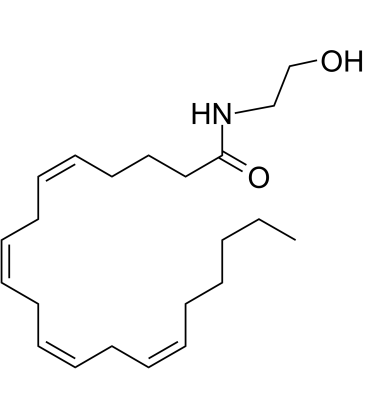 0 ImagesSynonyms: AEA; Arachidonoyl ethanolamideAnandamide is an endocannabinoid. Anandamide modulates both neuronal and immune functions through two protein-coupled cannabinoid receptors (CB1 and CB2). Anandamide can activate numerous other receptors like PPARS, TRPV1, and GPR18/GPR55. Anandamide also has potential anti-fungal and anti-inflammatory activities. Anandamide can be used for the research of Alzheimer’s disease (AD) and ulcerative colitis.
-
Synaptamide
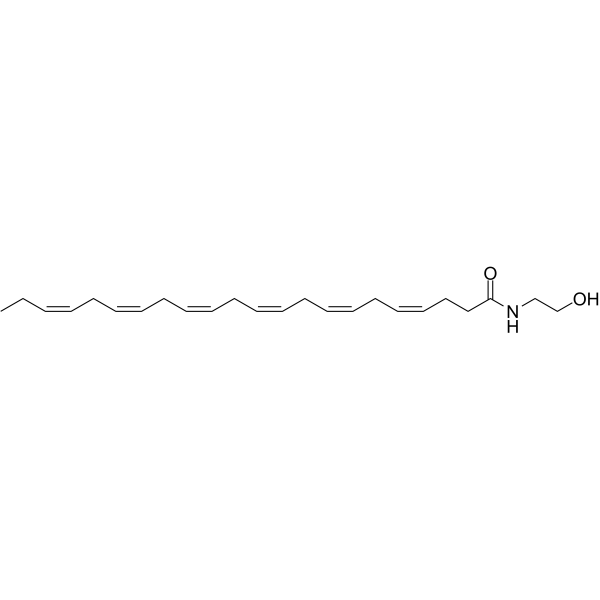 0 ImagesCat. No.: HY-100197CAS No.: 162758-94-3Synonyms: N-Docosahexaenoyl ethanolamine (DHEA); Docosahexaenoyl ethanolamideSynaptamide (Dehydroepiandrosteron; DHEA) is an endogenous metabolite and structural analogue of Anandamide. Synaptamide binds to both the cannabinoid-1 and 2 (CB1 and CB2) cannabinoid receptors and has anti-inflammatory properties. Synaptamide is the first small-molecule endogenous ligand of an adhesion G protein-coupled receptor (aGPCR) .
-
Leelamine
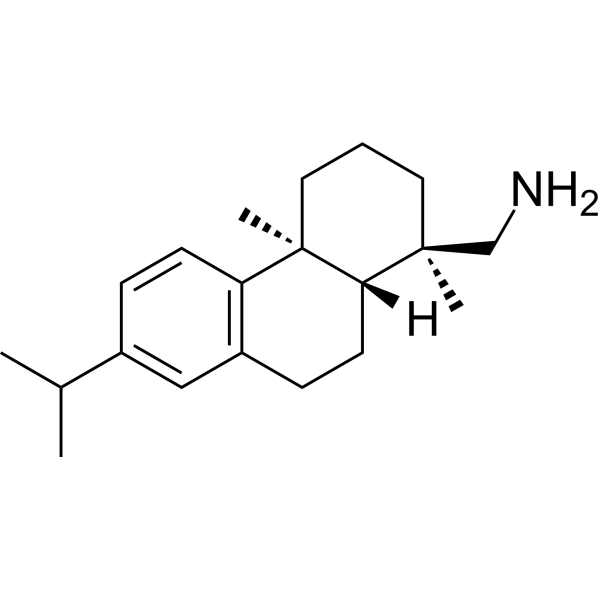 0 ImagesCat. No.: HY-W005629CAS No.: 1446-61-3Leelamine is an orally active pyruvate dehydrogenase kinase (PDK) inhibitor with an IC50 value of 9.5 μM, showing a blood glucose lowering effect in the diabetic mouse. Leelamine is also a weak agonist of cannabinoid receptors CB1 and CB2. Leelamine decreases mitotic activity, prostate-specific antigen expression and induces Apoptosis to cell death in cancer cells.
-
Tetrahydromagnolol
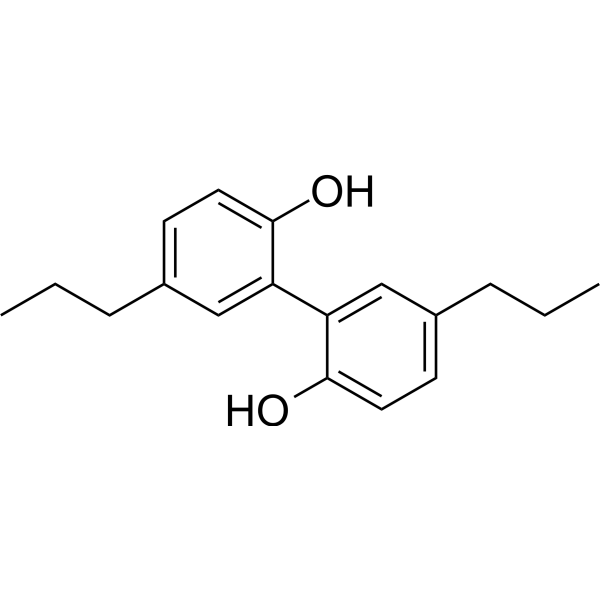 0 ImagesSynonyms: MagnolignanTetrahydromagnolol (Magnolignan), the main metabolite of Magnolol, is a potent and selective cannabinoidCB2 receptor agonist (EC50 =170 nM) and GPR55 antagonist. The Ki of Tetrahydromagnolol for CB2 is 416 nM, 20-fold higher than for the CB1 receptor. Magnolol shows antifungal, anti-inflammatory and analgesic effects.
-
GW-405833
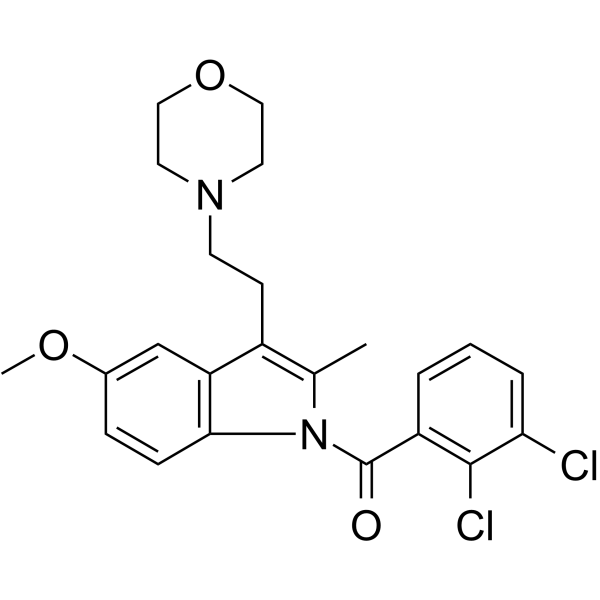 0 ImagesSynonyms: L768242GW-405833 (L768242) is a potent, selective cannabinoid receptor 2 (CB2) agonist. GW405833 has EC50 and Ki values of 0.65 nM and 3.92 nM for CB2, and EC50 and Ki values of 16.1 μM and 4772 nM for CB1. GW-405833 also exhibits non-competitive CB1 antagonist, exerting its analgesic and and anti-inflammatory effect through a CB1 receptor (rather than CB2) dependent mechanism. GW-405833 can significantly inhibit the production of cAMP stimulated by Forskolin (HY-15371). GW405833 inhibits glycolysis by down-regulating HIF-1α, thereby alleviating acute liver failure (ALF).
-
CB1/2 agonist 3
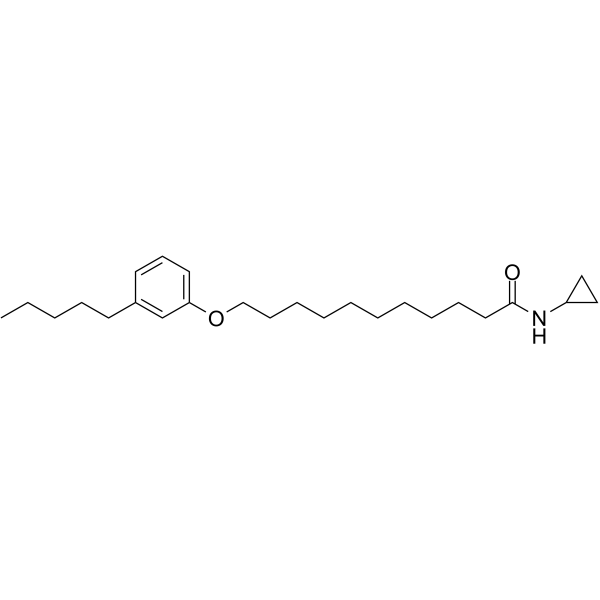 0 ImagesCB1/2 agonist 3 (compound 52), a potent non-selective cannabinoid ligand, is a CB1/CB2 (cannabinoid receptor) competitive agonist. CB1/2 agonist 3 acts on hCB1 and hCB2 with Ki values of 5.9 nM and 3.5 nM, respectively.
-
N-Arachidonyldopamine
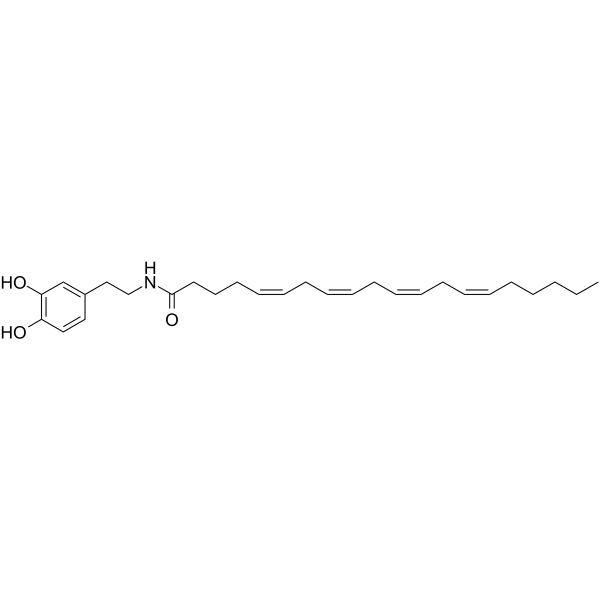 0 ImagesN-Arachidonyldopamine acts as an Anandamide (HY-10863) membrane transport inhibitor, a selective CB1 cannabinoid receptor agonist, and a VR1 receptor activator. It exhibits an EC50 value of 48 nM for rat VR1 and a Ki value of 0.25 μM for CB1. N-Arachidonyldopamine exists in mammalian neural tissues. It stimulates intracellular Ca2+ mobilization, mediates cannabinoid-like effects, and induces hypothermia, hypomotility, catalepsy, analgesia, and hyperalgesia to heat. N-Arachidonyldopamine possesses anticancer activity against breast cancer. It can be used in research related to breast cancer and heat hyperalgesia.
-
GW405833 hydrochloride
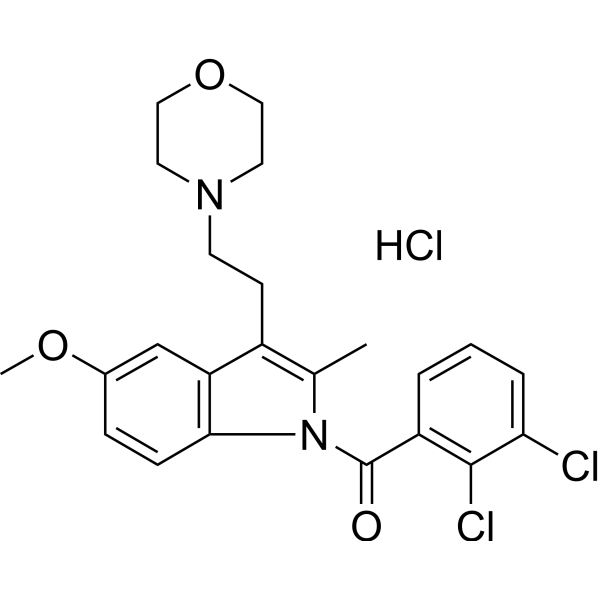 0 ImagesSynonyms: L768242 hydrochlorideGW405833 (L768242) hydrochloride is a potent, selective cannabinoid receptor 2 (CB2) agonist. GW405833 has EC50 and Ki values of 0.65 nM and 3.92 nM for CB2, and EC50 and Ki values of 16.1 μM and 4772 nM for CB1. GW405833 hydrochloride also exhibits non-competitive CB1 antagonist, exerting its analgesic effect through a CB1 receptor (rather than CB2) dependent mechanism. GW405833 hydrochloride can significantly inhibit the production of cAMP stimulated by Forskolin (HY-15371). GW405833 hydrochloride inhibits glycolysis by down-regulating HIF-1α, thereby alleviating acute liver failure (ALF).
-
GW 833972A
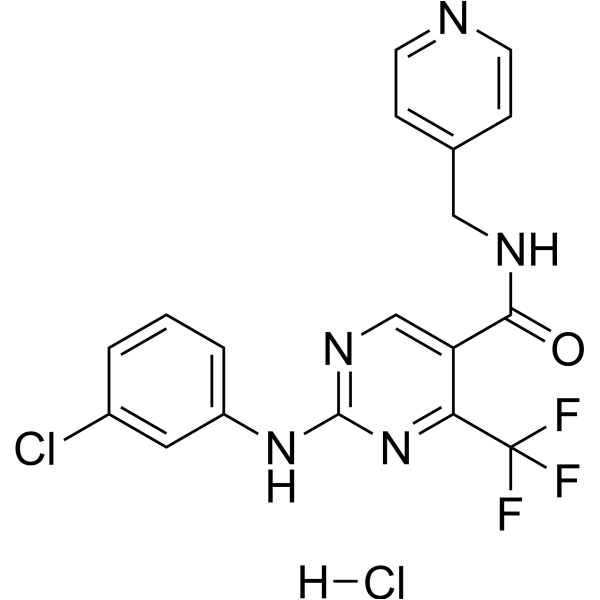 0 ImagesGW 833972A is a selective CB₂ receptor agonist with pEC₅₀ of the human CB₂ receptor for GW 833972A of 7.3, and its selectivity for the CB₂ receptor is approximately 1000 times higher than that for the CB₁ receptor. GW 833972A inhibits induced neuronal depolarization and suppresses coughing caused by citric acid in guinea pig models. GW 833972A can be used for the study of chronic cough.
-
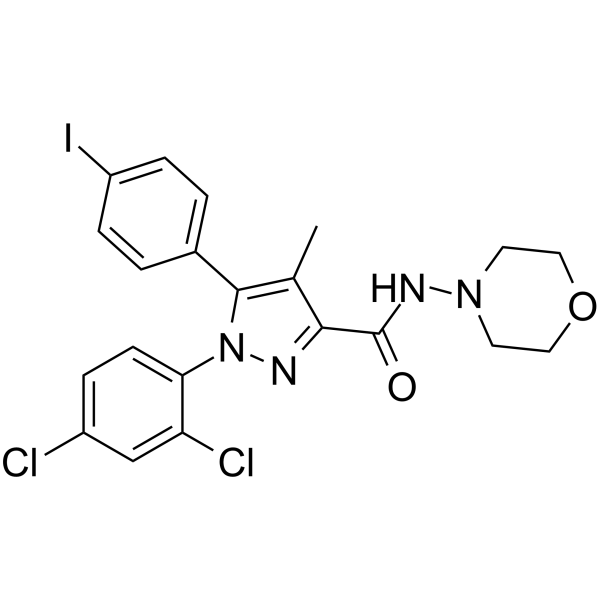
Ibipinabant
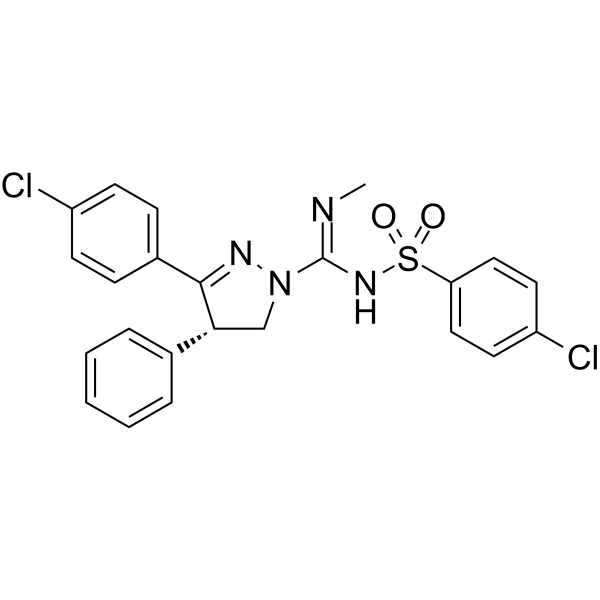 0 ImagesSynonyms: SLV319; BMS-646256
-
Eicosapentaenoyl ethanolamide
 0 ImagesEicosapentaenoyl ethanolamide, an omega-3 fatty acid, is one of N-acylethanolamines (NAEs). Eicosapentaenoyl ethanolamide is cannabinoid CB1/CB2 receptor agonist. Eicosapentaenoyl ethanolamide acts as a metabolic signal. Eicosapentaenoyl ethanolamide inhibits dietary restriction (DR)-induced lifespan extension in wild type animals and suppresses lifespan extension in a TOR pathway mutant.
-
CB1/2 agonist 1
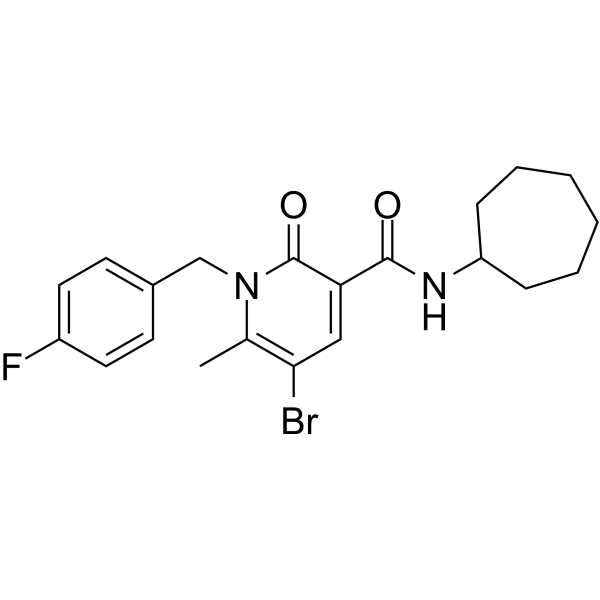 0 ImagesCB1/2 agonist 1 is a potent and cross the blood-brain barrier CB1/2 agonist with EC50s of 56.15, 11.63 nM for CB1R and CB2R, respectively. CB1/2 agonist 1 reduces glutamate release and LPS-induced activation of microglial cells. CB1/2 agonist 1 shows anti-inflammatory and antinociceptive effects. CB1/2 agonist 1 has the potential for the research of multiple sclerosis.
-
Dihomo-γ-Linolenoyl Ethanolamide
 0 ImagesDihomo-γ-Linolenoyl Ethanolamide, an endocannabinoid, is a cannabinoid (CB) receptor agonist with Kis of 857 nM and 598 nM for human recombinant CB1 and CB2 receptors, respectively.
-
CB1 antagonist 4
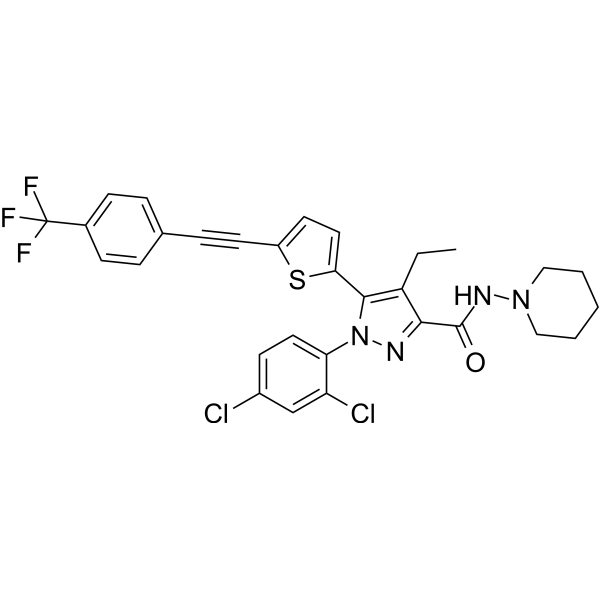 0 ImagesCB1 antagonist 4 (compound 8) is a selective cannabinoid receptor 1 (CB1) inverse agonist with an IC50 of 8.5 nM for human CB1. CB1 antagonist 4 shows selective for CB1 over CB2 receptors (IC50 of 604.9 nM). CB1 antagonist 4 inhibits GTP binding to CB1-overexpressing cell membranes with an EC50 of 18.5 nM.
-
CB1 inverse agonist 2
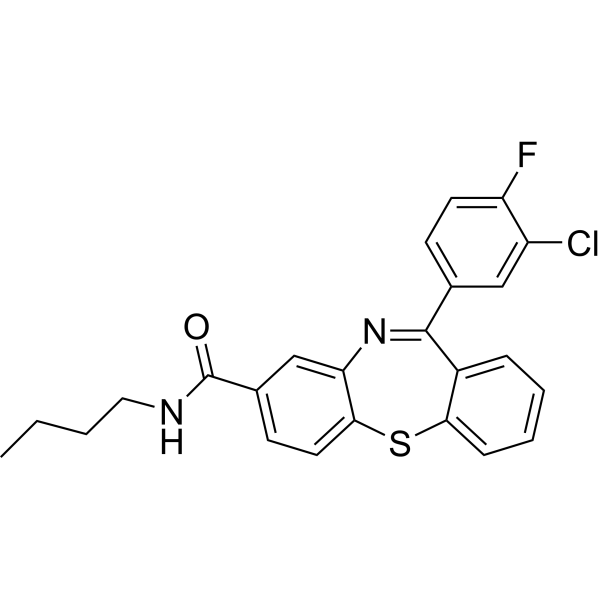 0 ImagesCB1 inverse agonist 2 is an orally active inverse agonist of Cannabinoid Receptor CB1. CB1 inverse agonist 2 effectively inhibits CP55940-induced hypothermia and anorexia in mice model.
-
PGN36
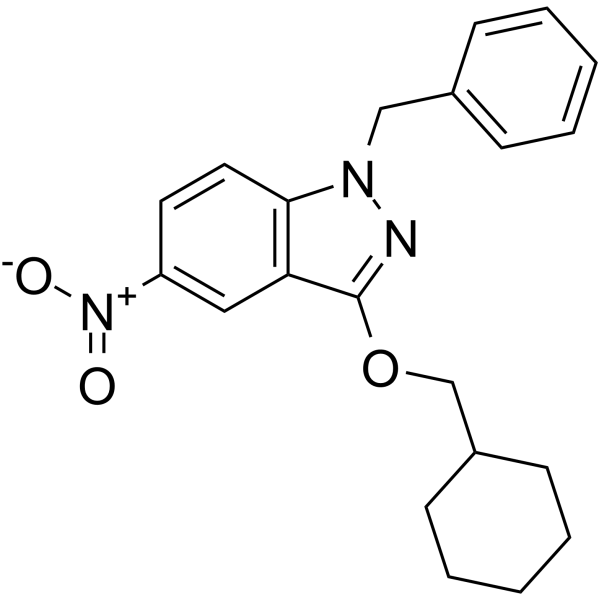 0 ImagesPGN36 is a selective cannabinoid CB2 receptor (CB2R) antagonist with Kis of 0.09 µM and >40 µM for CB2R and CB1R, respectively. PGN36 abolishes the increase in collagen type I gene expression by the inducer of bone activity. PGN36 is able to cross the blood-brain barrier. PGN36 can be used for the study of frontotemporal dementia (FTD).
-
Etrinabdione
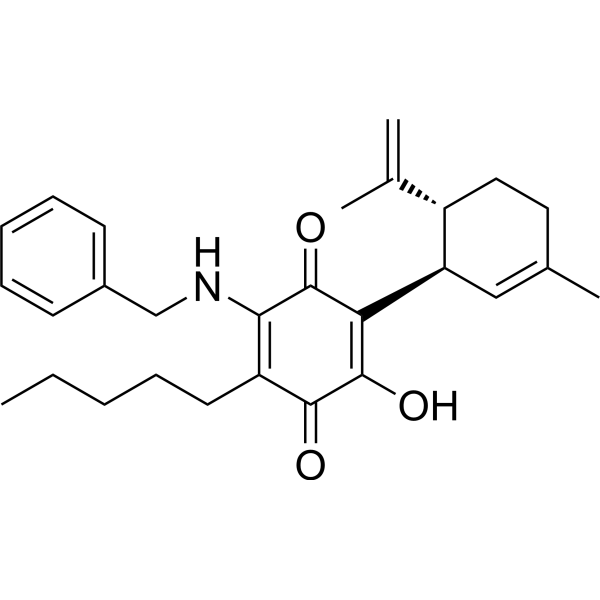 0 ImagesSynonyms: EHP-101; VCE-004.8Etrinabdione (EHP-101; VCE-004.8) is an orally active, specific PPARγ and CB2 receptor dual agonist. Etrinabdione inhibits prolyl-hydroxylases (PHDs) and activates the HIF pathway. Etrinabdione, a semi-synthetic multitarget cannabinoquinoid, has potent anti-inflammatory activity. Etrinabdione attenuates adipogenesis and prevents diet-induced obesity.